
Solar for Apartments: A Renter's Guide
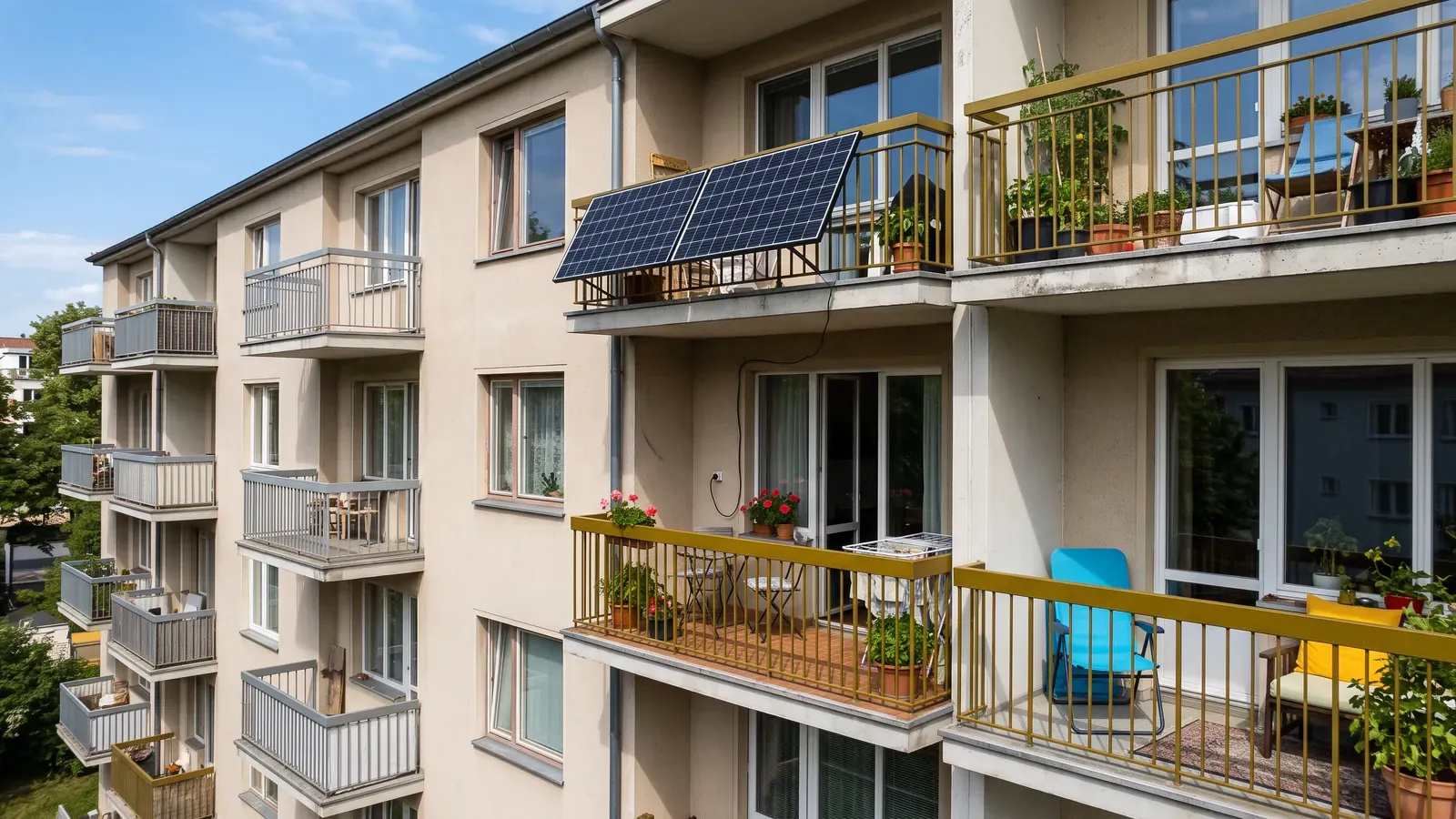
Solar works without a roof. In an apartment, a plug-in kit set on your balcony or windowsill works, and you take it along when you move.
Can Renters Go Solar?
Yes, and each year more places make it possible. For rooftop solar, you need the owner. Plug-in solar leaves the building's wiring alone, which finally makes solar panels for renters practical.
A couple of rules count here. Your state's law sets if the utility must approve the kit. Your lease decides what you're allowed to put on the balcony.
A certified kit can plug in without a utility agreement in 10 states: California, Colorado, Connecticut, Maine, Maryland, New Hampshire, New Jersey, Utah, Vermont and Virginia.
Talking to Your Landlord
Send a written request, and keep it brief. Describe the kit, where it goes, and how it's attached. Three things worry landlords:
- Damage. Straps and clamps make no holes. Point that out.
- Falling pieces. Show the panel sitting inside the railing and tied down.
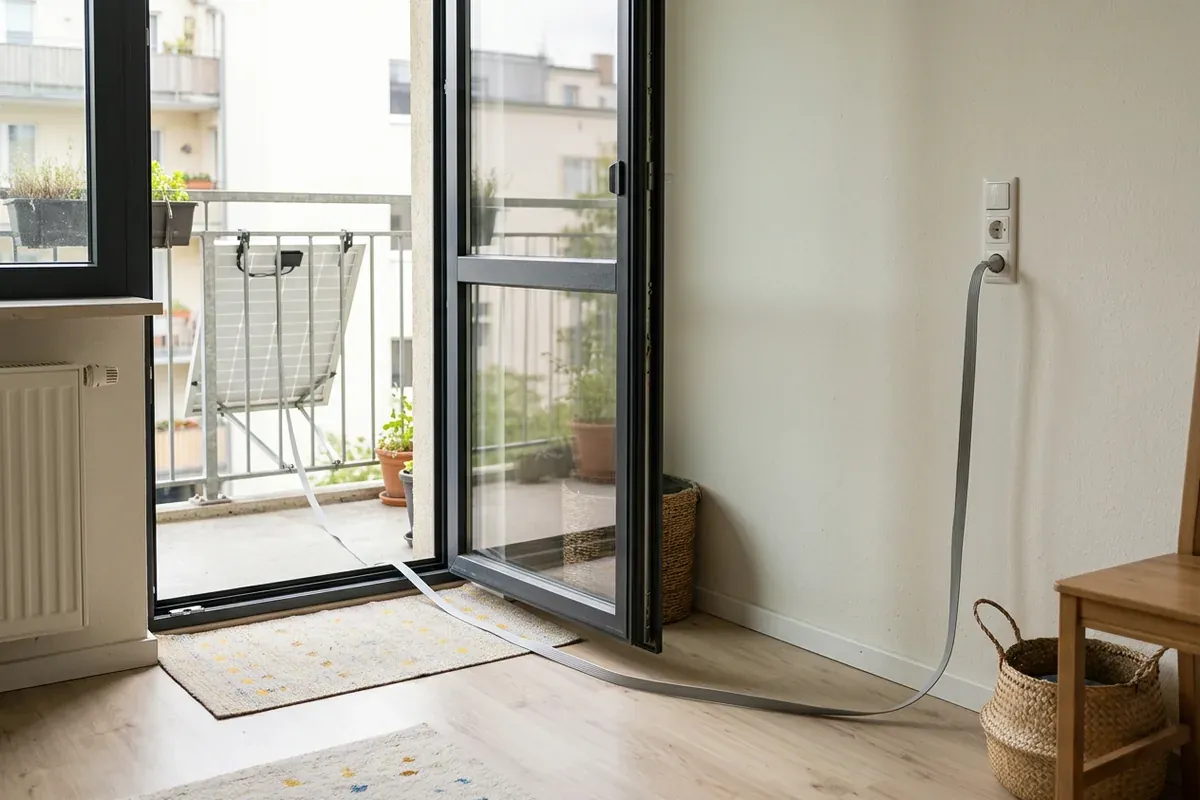
- The wiring. The kit runs on an existing outlet and adds no new circuits.
Some state laws now stop a landlord from unreasonably refusing a plug-in kit. When that applies, your state page points it out.
Choosing a Kit for an Apartment
Small and light wins here. An apartment balcony solar panel should be something you can carry up stairs easily and that stays safe in wind. Check for:
- A total of 400 to 800 W. A balcony rarely has room for more.
- Panels without glass if they hang on the railing.
- A cord long enough to get to an outlet with no extension cord.
The Bright Saver 360 W kit weighs the least of every kit on our list. The EcoFlow STREAM Ultra includes a battery added to it, so power generated while you're away at work runs your evening. See every kit.
Portable Panels for Renters
For an apartment, portable solar panels come in two types. Some of them charge a power station, such as a large battery with outlets. Because they never connect to the grid, no utility rule applies. But you still have to plug your things into that battery.
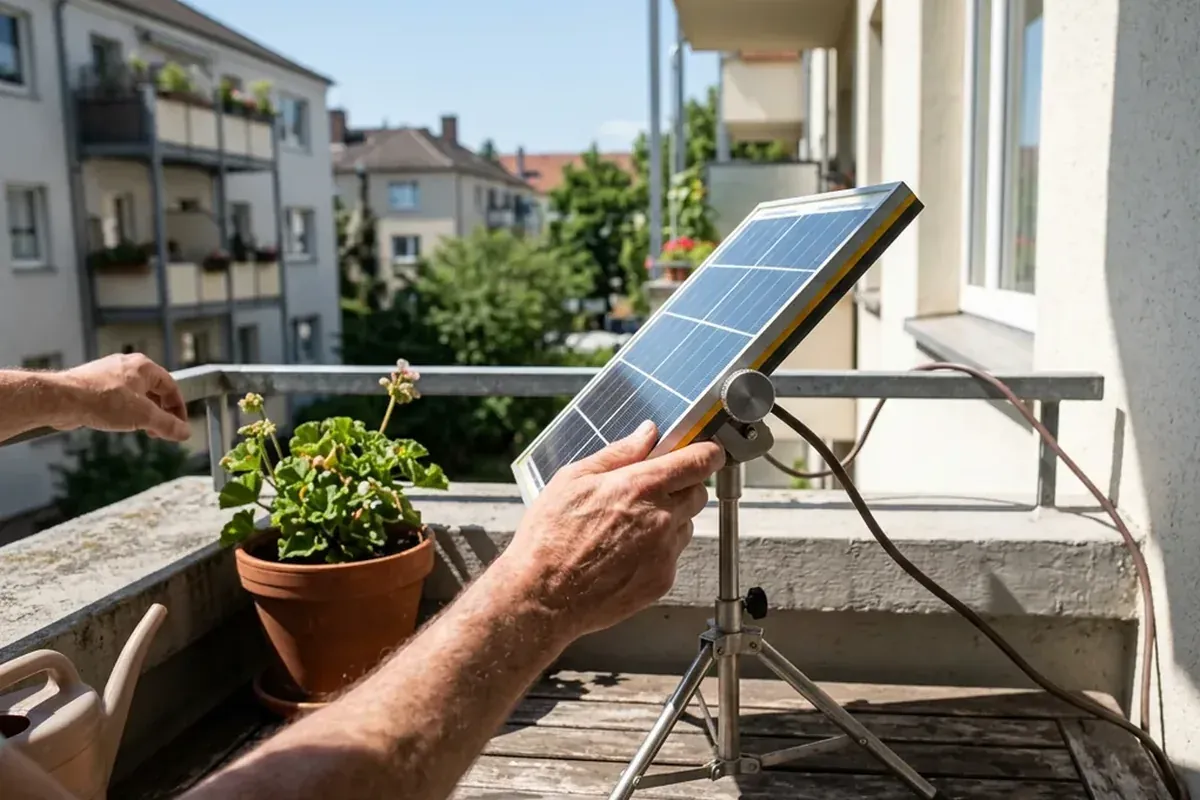
The second option is a plug-in kit that sits on a stand. It sends power straight to your home's outlets. Day to day, that type is more useful, and it's the kind state laws cover.
Moving Out
Unplug it, take off the straps, and pack it up. Compared with rooftop solar, that's the big advantage. Check the page for the new state and ask the new landlord before you sign a new lease.
Before you buy, would you like numbers? The savings calculator tells you what savings a kit brings in your state.
Questions
Is a landlord able to stop me from using solar panels?
Yes, in most cases, and your lease is the reason. In a few states, plug-in laws limit what a landlord is allowed to refuse, so check your state page. Most trouble is avoided when you ask in writing first.
In an apartment, do I need my utility's permission?
Not when your state has a plug-in law and the kit is certified and stays under the cap. A short notice form is still asked for by some of those laws. The utility's usual rules apply in other states.
Which solar panel works best on an apartment balcony?
A panel of 180 to 450 W that is light, glass-free, and straps to the railing. That's what the Bright Saver kit is built for. Heavy glass panels work better on a floor stand.