
Plug-In Solar in Virginia
Yes. Virginia's plug-in solar law lets a certified kit of up to 1,200 watts use an outlet with no utility approval and no fee, after you submit a short notice form.
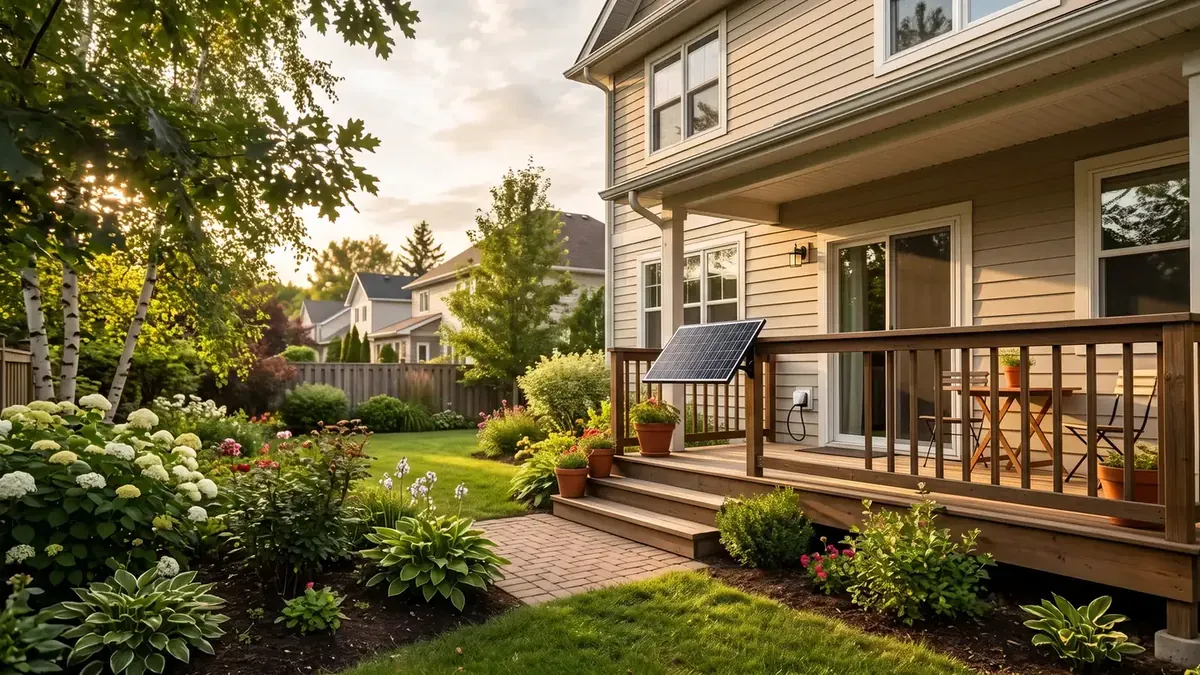
- Legal in Virginia from Jan 1, 2027HB 395, SB 250
- Each home can have as much as 1,200 W.
- 16.9 centsFor Jan to Aug 2026, this is the EIA average home price per kWh.
- The amount is $196 a year.In Virginia Beach, an 800 W kit, before any utility solar fee.
Connect in Virginia only after you pick a kit of 1,200 W or less with an inverter that stops sending power if the grid goes down.
Virginia Law, Explained
Signed on Apr 22, 2026, HB 395 and SB 250 take effect on Jan 1, 2027. The statutes are Chapter 1052 (HB 395) and Chapter 998 (SB 250), listed in the 2026 Acts of Assembly.
Size limit is 1,200 W, and a simpler tier goes up to 391 W.
Safety listing: A kit must meet the latest National Electrical Code, be certified by a testing lab recognized across the country (NRTL, per 29 C.F.R. 1910.7) or an equivalent body, and include a feature that blocks power export and keeps it from affecting the building's wiring in an outage.
Utility approval: none needed. The device falls outside interconnection requirements, and approval can't be demanded before installation or use by any utility, whether investor-owned, municipal or cooperative.
You must tell the utility. The State Corporation Commission's notification form goes to the utility, online or by mail, and the customer submits it before installing. The utility gets 15 days to flag errors, and if no reply arrives within 15 days, you may install.
Fees: No fee tied to the device may be charged by the utility, and no extra controls or equipment may be required. The utility may put in an automatic locking disconnect switch. That applies where a property carries more than one device, or where the local circuit needs one.
Renters and landlords: A landlord with more than four rental units can't stop a tenant from putting a device on the outside of the tenant's premises, though reasonable rules on size, place and placement are allowed. A tenant has to give the landlord 7 days' notice along with proof the device qualifies, and the tenant is responsible for any damage. Ratio utility billing (RUBS) units are excluded.
HOAs: If a home's device meets historic district, zoning height and setback rules, a locality may not prohibit it. HOA, condo and other private covenants still apply; the law doesn't override them.
Net metering: the device isn't eligible. Net metering doesn't include them.
- Each dwelling unit may install up to 1,200 W, and in multi-family housing that covers every residential building unit. Plug the device into an ordinary electrical outlet and keep it on the customer side of the meter.
- A device at 391 W or less at the outlet is free of the product listing provisions that otherwise require work on the wiring or panel of the building, and it still needs the notice.
- A published SCC notification form is marked to take effect January 1, 2027.
- A utility isn't liable for damage, injury or service interruptions the device causes.
- By November 15, 2026, a state work group on safety standards, which covers lockable disconnect switches, must deliver its findings.
Rules for Bigger Systems Before This Law
Hooking up: Net metering rules still apply to a home solar system until the plug-in law takes effect. The customer notifies the utility, and interconnection approval must come before installation. In residential cases, the utility must decide within 30 days.
Net metering: Residential systems up to 25 kW can use it, but the new law leaves plug-in devices out.
Savings from a Kit in Virginia
By PVWatts, 1 kW of panels in Virginia Beach produces 1,446 kWh over a year, and Virginia homes pay 16.9 cents for every kWh in 2026 so far. An 800 W kit varies by panel location:
| Where the panels go | kWh a year | Saved a year |
|---|---|---|
| Tilted south on a stand | 1,156 | $196 |
| Upright on a railing | 729 | $123 |
| Facing east or west | 925 | $157 |
Each Month in Virginia Beach
- Jan78
- Feb83
- Mar99
- Apr110
- May115
- Jun110
- Jul112
- Aug108
- Sep94
- Oct98
- Nov82
- Dec69
kWh made by an 800 W kit, tilted south.
Kits That Fit Under 1,200 W
| Kit | kWh a year | Saved a year | Pays back in | Price |
|---|---|---|---|---|
| US Solar Supplier 1180 W EZ1 Kit | 1,706 | $289 | 3.1 years | $899 |
| Bright Saver 360 W Balcony Kit | 520 | $88 | 4.7 years | $414 |
| EcoFlow STREAM 800 W Kit | 1,156 | $196 | 5.6 years | $1,099 |
Panels tilted south, with all power used at home. Compare all kits
Good to Know in Virginia
- Virginia's plug-in law shields renters, and few states offer that protection. Bigger landlords can't stop you placing a kit outside your unit, though rules from your HOA or condo still apply.
- Virginia makes you file a notice form with your utility before plugging in, which states with no notice step don't require.
- In 2024, the average Virginia home power cost was 14.41 cents/kWh, a moderate rate.
Renting or Using a Balcony?
The hookup is what Virginia's law covers, and the mount is not (its renter rule is above). Check with your landlord or HOA first. Read about balcony solar and solar for apartments.
Primary Utilities
- Dominion Energy Virginia (Virginia Electric & Power Company)
- Appalachian Power Company
- Northern Virginia Electric Cooperative
- Rappahannock Electric Cooperative
Savings from a Kit in Virginia
- Select a kit of 1,200 W or less. That cap covers 7 of the 7 kits we compared. Each one must have the listing the law names. Compare all kits.
- Read the notice rule above. If it applies to you, tell your electric utility. Store the spec sheet for your kit with your paperwork.
- Never use a power strip with it. Plug it into a grounded outlet whose circuit has little else on it.
Sources
- HB395 - 2026 Regular Session | LIS
- SB250 - 2026 Regular Session | LIS
- CHAP1052 - 2026 Regular Session | LIS
- Virginia SCC - Portable-Solar-Generation
- SCC Customer Device Notification Form (Form SPGDN)
- EIA State Electricity Profile tables, Virginia 2024
- NREL PVWatts, Virginia Beach plus EIA Table 5.6.B, 2026 prices
Browse every state at a glance or check a nearby one: Washington, DC, Maryland, Delaware.