
Plug-In Solar Kits Compared: Specs and Price per Watt
Among products sold in the US, our comparison covered 7 plug-in solar kits. Prices range from $414 to $3,048, starting at $0.76 a watt.
Plug and Play Solar Kit Comparison
| Kit | Per watt | Price | Panels | Inverter output | Safety listing | Warranty |
|---|---|---|---|---|---|---|
| 1US Solar Supplier 1180 W EZ1 Kit | $0.76 | $899 | 1,180 W | 900 W | UL 3700 inverter, CSA certified | 12 years (EZ1 inverter); panels have 15-year product / 30-year power coverage. |
| 2Bright Saver 360 W Balcony Kit | $1.15 | $414 | 360 W | 360 W | UL 3700 inverter, but the kit as a whole is not listed | 12 years (Hoymiles inverter) |
| 3EcoFlow STREAM 800 W Kit | $1.37 | $1,099 | 800 W | 1,200 W | UL 1741 inverter, no UL 3700 | 10 years (microinverter) |
| 4PluggedSolar 800 W Kit | $1.81 | $1,449 | 800 W | 800 W, seller's figure | UL 1741 inverter, no UL 3700 | Seller does not list |
| 5PluggedSolar APsystems 800 W Kit | $1.99 | $1,595 | 800 W | 800 W, seller's figure | Seller claims UL 3700 | The seller claims 25 years for the APsystems inverter and PluggedSolar 5 years, while APsystems' own EZ1 page states 12 years. |
| 6Mango Power S 1200 W Kit | $2.25 | $2,698 | 1,200 W | 1,120 W | Manufacturer claims UL 3700 | 25 years (microinverter) |
| 7Craftstrom 1200 W Plug&Play Kit | $2.54 | $3,048 | 1,200 W | 1,050 W | Manufacturer claims UL 3700 | 10 years (panels, inverters, PowerMeter) |
The ranking uses price per watt, which you get by dividing price by the panels' watts. If the inverter's output falls below the panels' total, its output is what reaches your outlets.
Download the full spec list: plug-in-solar-kits.csv. When we checked, each seller's own page displayed the prices reported here. Manufacturers don't pay for inclusion.
Understanding the Safety Listings
These inverters are all sold with the stated function of stopping power output during a grid outage. Written for wired solar, UL 1741 has long been the test for this shutdown function. Several state laws ask for UL 3700, the newer test for plug-in kits, or an equal listing.
A green tag marks an inverter that is stated as having UL 3700 certification. Yellow marks a claim of UL 3700 made only by the manufacturer or seller. A grey tag identifies a UL 1741 inverter that lacks UL 3700.
Add-On Battery Without Panels
- EcoFlow STREAM UltraThe battery holds 1.92 kWh and includes an 800 W inverter, costing $1,399. Add panels to use solar power in the evening.
How to Choose Plug and Play Solar Panel Kits or Systems
Your state is the first thing to consider. If a plug-in law applies there, write down the watt cap and the listing it requires. Any kit above the cap requires utility approval, even in a plug-in state.
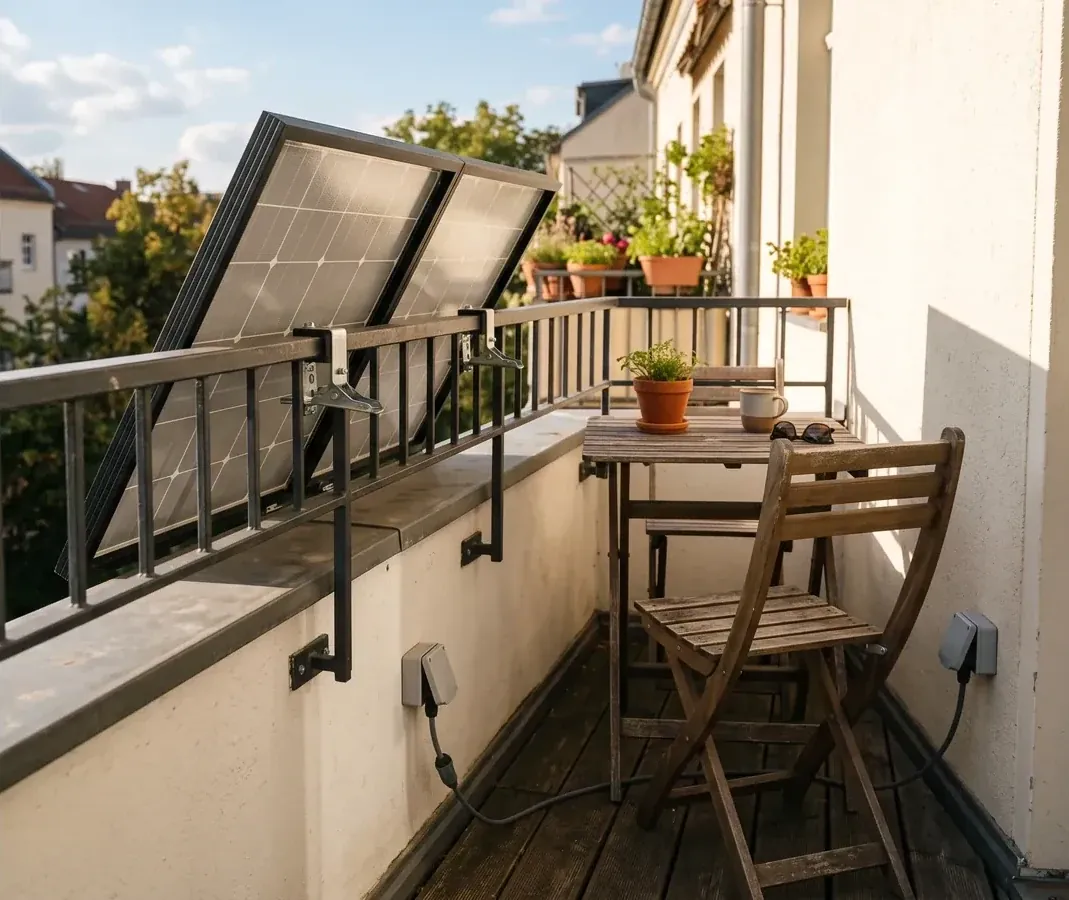
Next, consider the space you have. One or two light panels fit on a railing. Large glass panels suit a yard or garage roof, and they cost less per watt.
Your home schedule should be your last consideration. Power is used as it is made when you don't have a battery. With a battery like the STREAM Ultra, some of the power moves to the evening.
Kit Questions
What's the best plug-in solar kit?
The US Solar Supplier 1180 W EZ1 Kit comes in cheapest per watt, $0.76 a watt, but those are two big glass panels meant for a yard or roof. The Bright Saver kit is lightweight and inexpensive for a small balcony.
What wattage do I need?
Any plug-in kit makes far less power than most homes use. Size your choice by the available space and the cap in your state. Most balconies work best with 800 W. Most new laws set 1,200 W as the limit.
Why is the UL 3700 listing important?
Several state laws request a listing designed for plug-in solar. An inverter with UL 1741 certification is safe, although the standard was written for wired systems. Before you buy, check the page for your state.