
Balcony Solar: Kits, Rules and What It Saves
Put a panel or two on your railing and plug it into an outdoor outlet. That's Balcony solar. Of all the kinds of solar, it's the easiest. You see what's needed, plus what you get back.
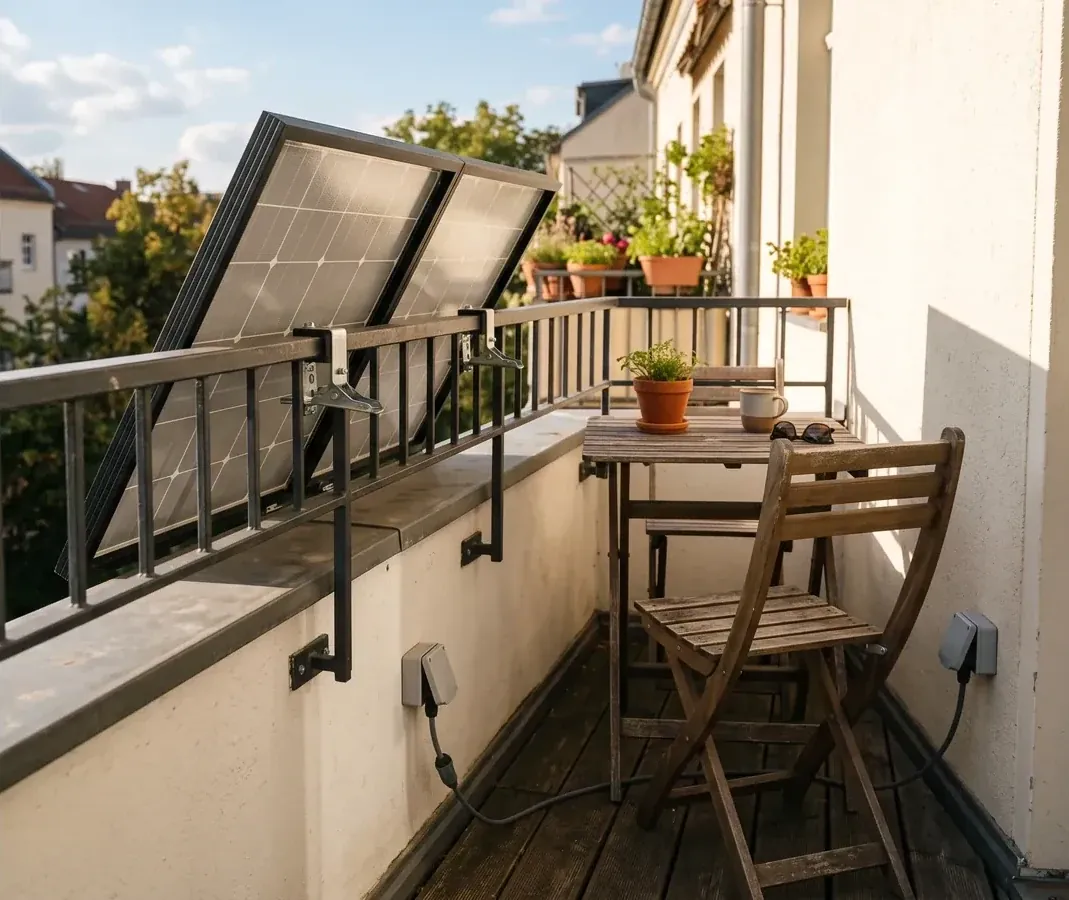
What Balcony Solar Is
Germany saw the first Balcony solar panels, and millions of homes in that country have them now. It's a simple idea. Hang a panel where the sun hits, and connect its cable to an outlet to plug it in.
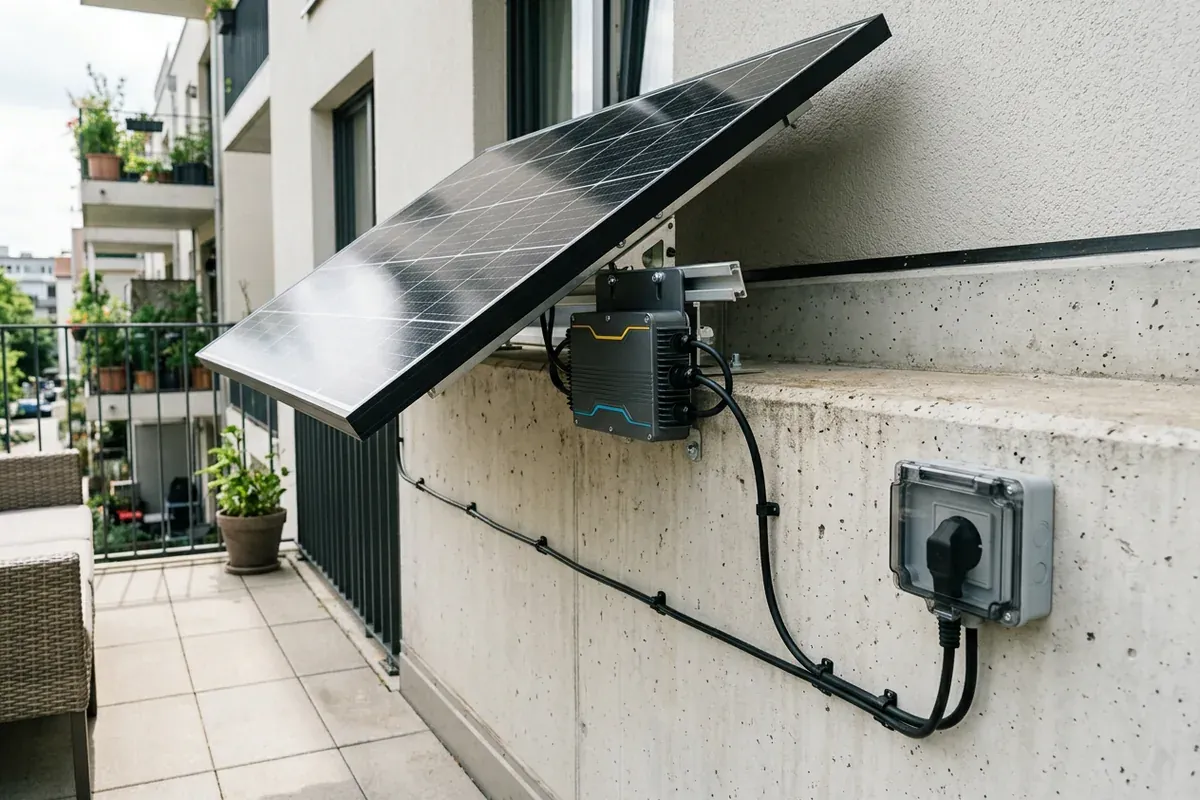
A microinverter takes its power from the panel. Inside that small box, the panel's DC power becomes the AC power your outlets carry. Anything running in your home draws on that first. Your meter then draws less power from the grid.
Balcony solar power in the US falls under a broader category called plug-in solar. Those same kits also go on decks, fences and garage roofs.
What Comes in a Balcony Solar Kit
Four parts make up a typical balcony solar kit:
- Panels, one or two of them, often 180 to 450 W each. Railings work best with light, glass-free panels.
- A microinverter that matches both the panels and your state's cap.
- A cord that ends in an ordinary three-prong plug.
- Railing mounts or straps, plus an app for tracking the output.
The Bright Saver 360 W kit was designed for use on railings. Larger kits, such as the EcoFlow STREAM, use heavier rigid panels, which work better with a floor stand. Compare every kit.
How Much Power a Balcony Makes
Tilted toward the south, an 800 W balcony solar system makes about 1,050 kWh each year in New York City. Upright on a railing, the same panels give you about 63 percent of that, according to our PVWatts runs.
How much it's worth depends on the price of power for you. At New York's rate, that comes to $307 a year. In cheaper states, the amount is lower. The savings calculator handles the math for your state and for your spot.
Mounting on a Railing
On most railings, a panel attaches with clamps or heavy straps. Check these three things first:
- It's solid metal or masonry, and it can hold the panel's weight plus wind load.
- Nothing hangs over the street: the panel stays inside the railing's outline.
- Its cable reaches an outdoor, grounded outlet without needing a long extension cord.
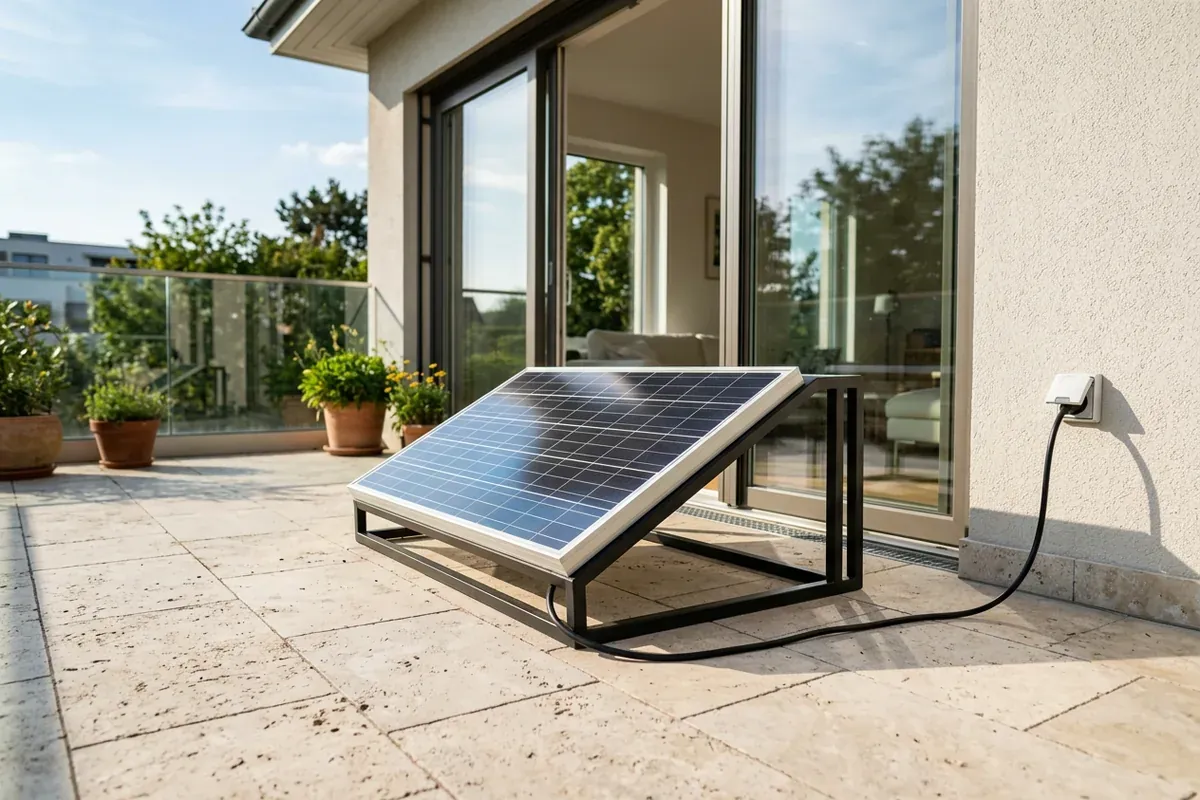
A tilted floor stand works if the railing won't do. It also often catches more sun, because you can angle it.
Where It's Allowed
A plug-in solar law has been passed in 10 states: California, Colorado, Connecticut, Maine, Maryland, New Hampshire, New Jersey, Utah, Vermont and Virginia. A certified kit below the cap can plug in there without a utility agreement.
In other places, your utility still treats it the same as any small solar system. Usually, you file an application before turning it on. Check your state.
Safety Basics
The kit you buy needs an inverter that stops sending power the instant the grid goes down. All of the listed microinverters do this too. Connect one kit per circuit, and don't run it through a power strip.
UL 3700, or an equal listing, is what several state laws ask for. It checks that a kit won't overload the circuit, and it was written for plug-in kits. You can see which kits claim it in our kit table.
Questions
For balcony solar panels, does your balcony need to face north or south?
South facing balconies do best, east and west still work too, while north facing balconies make very little. Direct sun for four or more hours makes a balcony worth it.
Is it possible for a balcony solar system to run my whole apartment?
No. The always-on load, like the fridge, the router and standby power, is covered by a 400 to 800 W balcony system, along with some daytime use. It lowers the bill instead of replacing it.
In winter, will balcony solar work?
Yes, but on short days with a low sun, output drops a lot. In winter, upright panels on a railing lose less than flat ones, because the low sun strikes them more squarely.